Sommaire
1. À quoi sert l’alternance des postures ?
2. Qu’est-ce qu’un bureau assis-debout ?
Notre mode de vie et notre façon de travailler ont largement évolué durant ces 50 dernières années, et ce depuis l’utilisation quotidienne des ordinateurs, et le développement des postes sédentaires. Ainsi, nous passons en moyenne près de 60% de notre temps éveillé assis[1], et ce pourcentage peut monter jusqu’à 75% pour les personnes travaillant dans un bureau. Télévision, voiture, ordinateur, bureau, etc… autant de raisons qui nous incitent à nous asseoir pour une durée courte ou prolongée.
Des études scientifiques récentes ont démontré que cette sédentarité augmenterait significativement les risques de problèmes cardiovasculaires et favoriserait l’apparition du cancer du colon. Ainsi, le risque de mort prématurée serait 37%[2] plus élevé pour les femmes travaillant assises au minimum 6 heures par jour, que pour celles restant assises seulement 3 heures maximum. Pour les hommes, ce taux est certes inférieur mais atteint néanmoins les 17%[3]. Ce risque est considéré comme étant faible en dessous de 4 heures passées assis par jour, moyen entre 4 et 8 heures par jour, et élevé au-delà de 8h[4]. C’est pourquoi il est essentiel de changer nos habitudes quotidiennes, y compris celles prises au travail. Et si on commençait par travailler debout ?
« Le risque de mort prématurée serait 37% plus élevé pour les femmes travaillant assis au minimum 6 heures par jour, que pour celles restant assis seulement 3 heures maximum. »
À quoi sert l’alternance des postures ?
De nombreuses études scientifiques ont prouvé la relation de cause à effet entre la position assise prolongée et l’augmentation des risques de pathologies plus ou moins lourdes : troubles de la circulation sanguine, perte de masse musculaire, douleurs lombaires, troubles digestifs, diminution des capacités cardiovasculaires, et même augmentation des risques de développement du cancer du colon. Outre les problèmes de santé, rester assis aurait un impact important sur la forme et la productivité : les personnes travaillant assises seraient en moyenne plus fatiguées que celles travaillant régulièrement debout.
« Les personnes travaillant assises seraient en moyenne plus fatiguées que celles travaillant régulièrement debout. »
La position debout, offre quant à elle de nombreux avantages tels qu’une grande liberté de mouvements et une zone de travail disponible plus large. En travaillant debout, nous sollicitons l’ensemble de nos muscles, réduisons la fatigue et l’endormissement causés par les points de pression lors de la station assise.
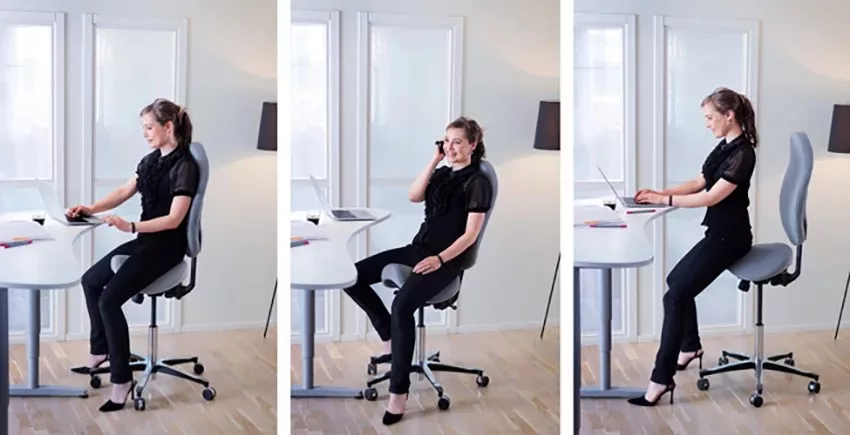
Cependant, il faut également prendre en compte la pénibilité et l’inconfort que peut provoquer la station debout de façon prolongée. Il est donc recommandé d’alterner les postures assis, assis debout et debout afin de solliciter les différents muscles, favoriser la circulation sanguine et réduire la fatigue physique et morale. Un bureau réglable en hauteur manuellement ou de façon électrique permet ainsi d’alterner facilement les trois positions.
« En travaillant debout, nous sollicitons l’ensemble de nos muscles, réduisons la fatigue et l’endormissement causés par les points de pression lors de la station assise. »

Qu’est-ce qu’un bureau assis-debout ?
Un bureau assis-debout est un bureau vous permettant de passer de la position assis, à la position debout, en passant par la position assis-debout, très facilement grâce à un réglage manuel ou électrique. Nos bureaux Delta par exemple, sont équipés d’un moteur dans chaque pied, permettant ainsi un réglage de la hauteur de façon très précise et rapide, et ce depuis deux boutons situés sous le plateau.
Ce concept existe déjà depuis une dizaine d’années dans les pays scandinaves, tend à se développer de plus en plus aux États-Unis, et séduit petit à petit les pays Européens. Bien plus qu’un effet de mode, il s’agit avant tout d’une philosophie liée au confort de travail : la majorité des employés qui alternent les postures grâce à des bureaux à hauteur variable, affirment se sentir en meilleure forme et avoir l’esprit plus alerte pour travailler. Les employeurs, quant à eux, mesurent les bénéfices par la productivité de leur personnel, ainsi que par la diminution des arrêts de travail liés à des lombalgies.
Un bureau non réglable et avec une hauteur standard ne correspondra ainsi qu’à une petite partie de ses utilisateurs, qui possèdent tous une morphologie différente. En effet, la plupart du temps, la hauteur du plateau se trouve légèrement trop haut ou trop bas par rapport aux bras de son l’utilisateur, ce qui le contraint alors à baisser ou monter les épaules. Dans certains cas l’utilisateur est aussi amené à modifier la hauteur idéale de son siège pour compenser cette hauteur, ce qui entraîne une position assise inadaptée. Ces positions forcées qui n’ont rien de naturelles peuvent ainsi provoquer des douleurs au niveau des coudes, épaules, cervicales et région lombaire.
Un bureau assis-debout aura ainsi un double avantage pour son utilisateur :
- Adopter une posture saine en réglant le bureau à une hauteur convenant à sa taille et sa morphologie
- Adopter un nouveau mode de travail reposant sur l’alternance des postures afin de travailler de façon plus dynamique et plus productive
« Adopter un nouveau mode de travail reposant sur l’alternance des postures afin de travailler de façon plus dynamique et plus productive. »
En position assis-debout, les bureaux Delta peuvent s’accompagner de sièges assis-debout tels que le modèle High5, Capisco, Amazone ou Jumper. Ces sièges offrent une posture dynamique et saine, et permettent à leur utilisateur de travailler avec une grande mobilité, quelque soit le secteur d’activité.
Alors, prêts à passer debout ?

[1] Source : US National Library of Medicine / National Institute of Health
[2] Source : American Cancer Society
[3] Source : American Cancer Society
[4] Source : www.juststand.org
Découvrez les pages produits dédiées à nos bureaux à hauteur variable, ainsi qu’à nos sièges assis-debout.
Crédits :
Illustrations : ©Azergo 2019